By lyuesword | 24 February 2022 | 0 Comments
Process of the Polishing Work Ⅱ
JIZUYA
JIZUYA is a very thin NARUTAKI stone.
Some of them are fixed with paper, and some are not.
Choice is case by case.
And select suitable quality jizuya for the steel quality.
Polish the blade surface with JIZUYA completely except the hamon area.
The steel becomes clear and the steel particles come up.
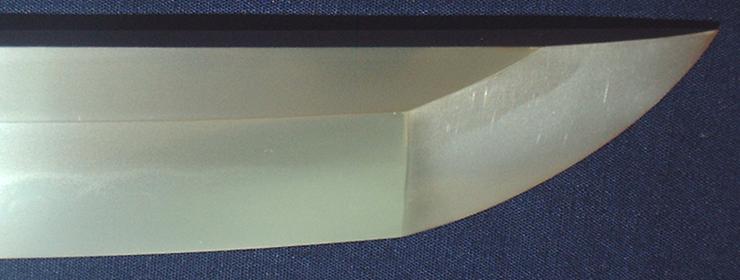
NUGUI
NUGUI is a very fine stone powder mixed with oil.
Polish the whole surface of the blade with it using cotton ball.
In this step, the work is very different between the classical style and the modern style.
The nugui work in the classical style is the final cleaning for the blade surface.
The work in the modern style is to make up a good contrast for an attractive view.
On the classical style, natural stones can be used for NUGUI.
There are various kinds of stone for it, for example, NARUTAKI, NAGURA, TSUSHIMA, iron ore.
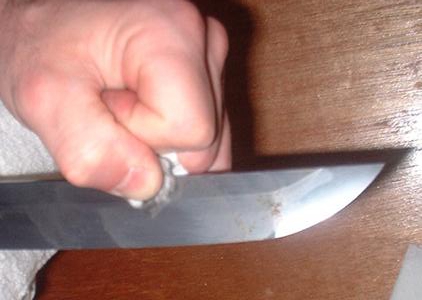
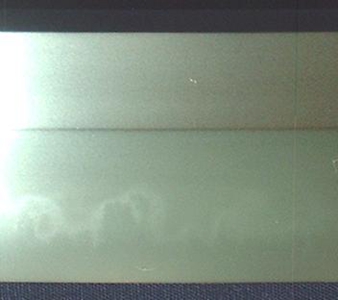
The surface becomes clean and the hamon comes up.
On the modern style, polishers have their own special material and oil for nugui.
It is far harder than the classical style's to make a black shining surface on the blade.
The work effects whole surface of the blade even on the hamon.
So the hamon is masked by this hard effective polishing.
Then the hamon area has to be polished again with hazuya.
Polisher uses hazuya carefully by their thumb to make a white pattern along the hamon.
This work is called "HADORI".
So this polishing style is called " HADORI style".
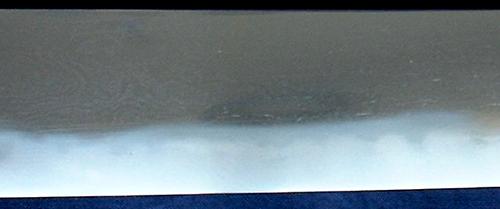
Good hadori work makes good contrast between the white pattern and the rest black shining area.
On this work polishers are thinking to get an attractive view.
So the pattern of white area is quite different by each polisher's sense, even if the hamon would be the same.
And the real hamon can be seen in the white pattern when you use good lighting.
MIGAKI
Rubbing Shinogiji and the back surface with a steel needle to get mirror finish.
In the modern style polishing, a mirror finished shinogiji is very common.
But on the classical style, the result of migaki should be mild.
Some old classical style polishings have no migaki effect.
Such a blade has same view on the cutting surface and on the shinogiji, and is good for study the blade.
(Before Migaki work:
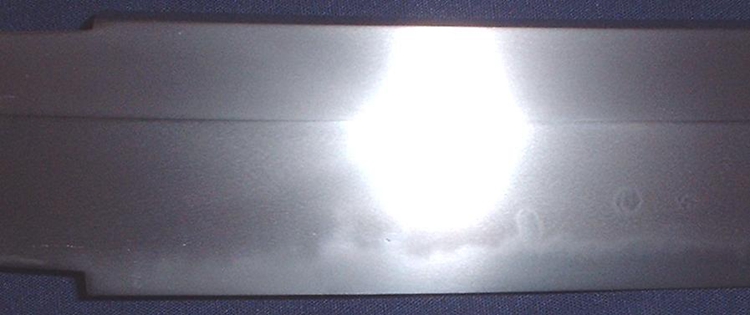
(After Migaki work: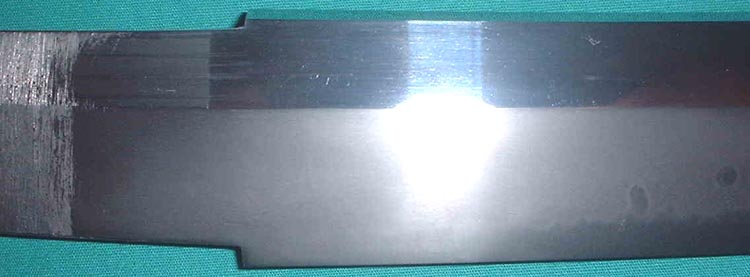
Want a unique sword? Feel free to contact us:
Email: lyuesword@hotmail.com
Website: www.lyuesword.com
Custom Sword Page: www.lyuesword.com/Custom-Sword/customization-options/Create-Your-Own-Swords
JIZUYA is a very thin NARUTAKI stone.
Some of them are fixed with paper, and some are not.
Choice is case by case.
And select suitable quality jizuya for the steel quality.
Polish the blade surface with JIZUYA completely except the hamon area.
The steel becomes clear and the steel particles come up.
NUGUI
NUGUI is a very fine stone powder mixed with oil.
Polish the whole surface of the blade with it using cotton ball.
In this step, the work is very different between the classical style and the modern style.
The nugui work in the classical style is the final cleaning for the blade surface.
The work in the modern style is to make up a good contrast for an attractive view.
On the classical style, natural stones can be used for NUGUI.
There are various kinds of stone for it, for example, NARUTAKI, NAGURA, TSUSHIMA, iron ore.
The surface becomes clean and the hamon comes up.
On the modern style, polishers have their own special material and oil for nugui.
It is far harder than the classical style's to make a black shining surface on the blade.
The work effects whole surface of the blade even on the hamon.
So the hamon is masked by this hard effective polishing.
Then the hamon area has to be polished again with hazuya.
Polisher uses hazuya carefully by their thumb to make a white pattern along the hamon.
This work is called "HADORI".
So this polishing style is called " HADORI style".
Good hadori work makes good contrast between the white pattern and the rest black shining area.
On this work polishers are thinking to get an attractive view.
So the pattern of white area is quite different by each polisher's sense, even if the hamon would be the same.
And the real hamon can be seen in the white pattern when you use good lighting.
MIGAKI
Rubbing Shinogiji and the back surface with a steel needle to get mirror finish.
In the modern style polishing, a mirror finished shinogiji is very common.
But on the classical style, the result of migaki should be mild.
Some old classical style polishings have no migaki effect.
Such a blade has same view on the cutting surface and on the shinogiji, and is good for study the blade.
(Before Migaki work:
(After Migaki work:
Want a unique sword? Feel free to contact us:
Email: lyuesword@hotmail.com
Website: www.lyuesword.com
Custom Sword Page: www.lyuesword.com/Custom-Sword/customization-options/Create-Your-Own-Swords
Leave a Reply
Your email address will not be published.Required fields are marked. *